






Why Cashmere Earns Its Place in a UAE Wardrobe
There's a specific kind of cold that has nothing to do with the weather outside. It's the cold of a Dubai Mall food court in July, a taxi with the AC turned up too high, or a flight from DXB where the cabin crew seem to think everyone's dressed for a ski trip. This is where a cashmere scarf earns its keep in the UAE, not during the two or three genuinely chilly weeks in January when Sharjah mornings dip into the teens, but year round, indoors, against air conditioning that never really switches off. A pure cashmere scarf is warm without bulk, so it slides into a handbag and comes out looking exactly as it went in.
Outside, when the UAE winter does arrive properly, usually from late November through February, cashmere handles the evening drop in temperature at outdoor majlis gatherings, desert camps, and rooftop dinners far better than synthetic fabrics. It traps warmth in a way that feels weightless rather than insulated, which matters when you're also wearing an abaya or layering over office wear and don't want to feel wrapped in a blanket.
What Actually Separates Cashmere From Wool and Acrylic
Cashmere is wool, technically, but calling it "wool" undersells it the way calling champagne "wine" undersells a very good bottle. Ordinary sheep's wool fibres are thick, coarse, and often need to be tightly woven to hold a shape, which is part of why cheaper wool scarves can feel scratchy against the neck. Cashmere comes from the fine undercoat of Kashmir and Changthangi goats, combed out (not shorn) once a year, and each fibre is a fraction of the diameter of sheep's wool. That thinness is precisely why it feels so soft against skin, and also why it takes far more raw material, and far more labour, to produce a single scarf.
The wool vs cashmere debate really comes down to weight and warmth ratio. A merino wool scarf might weigh the same as a cashmere one but insulate less, because cashmere fibres trap air more efficiently in tiny pockets. Acrylic, the synthetic stand-in used in a lot of "cashmere-feel" or "cashmere blend" scarves sold around the region, mimics the softness for the first few wears and then pills, flattens, and stops insulating altogether. It also doesn't breathe the same way, so under an abaya or a blazer it can feel clammy rather than warm. When you see a scarf labelled 100% pure cashmere at a price that seems too good, it's worth asking what percentage is actually goat fibre versus a wool or viscose blend padded out to lower the cost.
Reading a Care Label Properly
Genuine cashmere pashmina and scarf labels will state the fibre origin, often Mongolian or Inner Mongolian cashmere, considered among the finest grades available commercially. Anything vague, like "cashmere-like" or "wool blend," is a signal to look closer. A true pashmina, incidentally, is a specific weaving tradition from the cashmere-producing regions of the Himalayas, not just a marketing word, though the term has been stretched to cover almost any soft wrap in recent years.
How to Judge Cashmere Quality Before You Buy
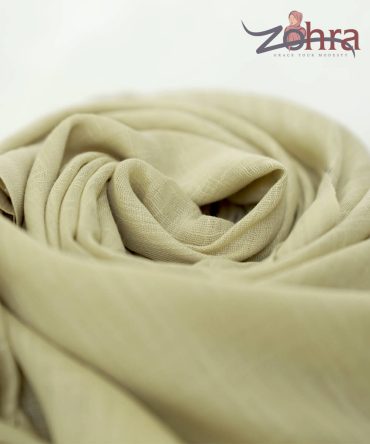
Softness is the obvious first test, but it's not the only one, and relying on it alone can mislead you because chemical softeners can fake a plush hand-feel on lower-grade fibre for a short while. Run the scarf between your fingers and check what happens after a light pull and release, good cashmere springs back to shape rather than staying stretched. Hold it up to light. If you can see through it easily and it feels almost weightless, that can mean either an exceptionally fine, high-grade fibre or, less desirably, a loose, low-density weave using shorter fibres. The difference usually shows in the drape, dense cashmere falls in soft, heavy folds, while a poorly woven scarf hangs limp and shapeless.
Pilling is the honest test of quality that shows up over time rather than in the shop. Every cashmere scarf will pill a little at first, that's the shorter fibres working their way to the surface and it's normal, but it should taper off after the first few wears. If pilling continues heavily wear after wear, the fibre length was likely too short or the grade too low to begin with. Weight matters too. A scarf under roughly 180 to 200 grams per square metre will feel light and be more of a transitional piece, while anything heavier moves into proper winter scarf territory, the kind you'd want for a genuinely cold evening rather than just an air-conditioned office.
A Quick Physical Checklist
Before buying, it helps to run through a few checks together rather than relying on any single one: the fibre should feel soft but not artificially slick, the weave should look even with no visible thin patches when held to light, the edges and fringe should be finished neatly without loose threads, and the scarf should hold its shape after being scrunched in your hand for a few seconds.
Styling a Cashmere Scarf Through a UAE Day
Over an abaya, a cashmere scarf in a neutral tone does something a printed silk scarf can't, it adds texture without competing with the abaya's own lines. Drape it loosely around the shoulders rather than tightly at the neck for daytime, and let it fall open at the front. For those wearing hijab, a finer weight cashmere pashmina can double as an outer layer over a lighter under-scarf on cooler days, giving warmth without the bulk of two heavy fabrics stacked together.
On a flight, especially the long-haul routes out of Dubai and Abu Dhabi where cabin temperatures are notoriously unpredictable, a cashmere scarf functions as blanket, pillow, and occasional eye cover in one. Fold it into a large loop and it becomes a travel wrap that takes up less room in carry-on than a proper blanket ever would.
In the office, a slimmer cashmere scarf worn under a blazer or draped over the back of a chair solves the universal problem of meeting rooms kept at temperatures better suited to server racks. And for evening, a cashmere pashmina in a richer, heavier weight, thrown over shoulders at a wedding or a winter garden dinner, reads as considered rather than an afterthought, in a way that a coat rarely manages indoors in the Gulf.
Choosing a Colour From Our Cashmere Range
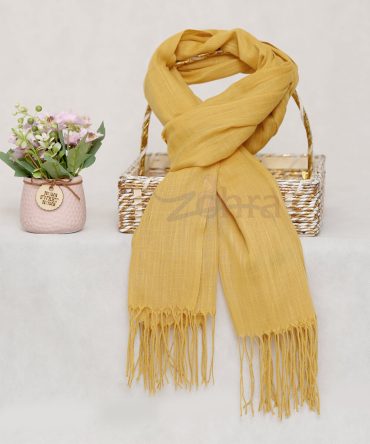
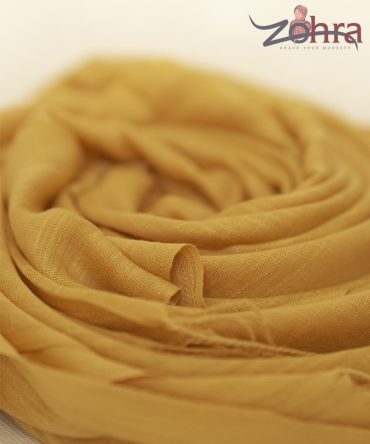
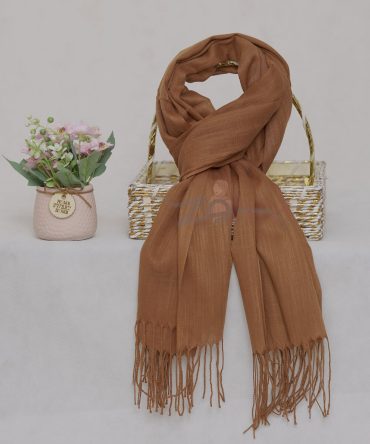
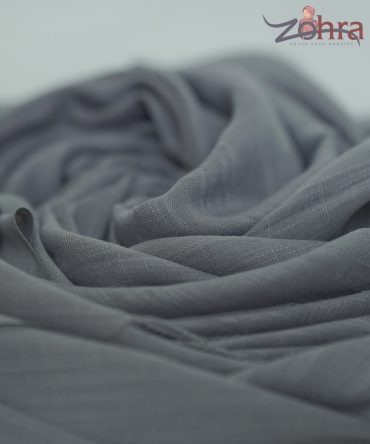
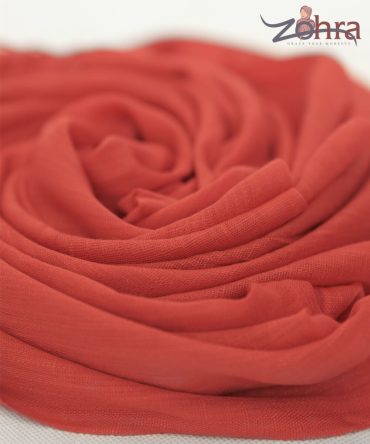
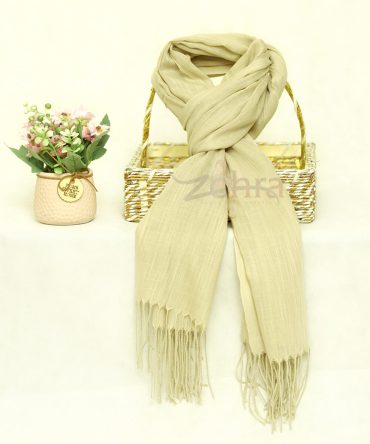
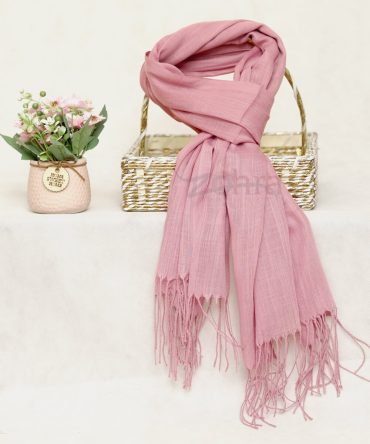
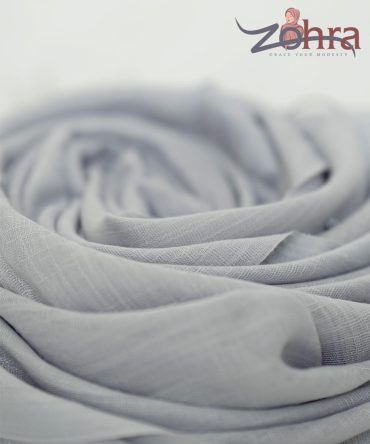
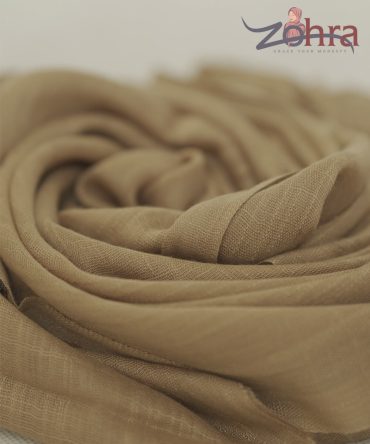
Camel is the colour most people reach for first, and for good reason, it works against darker abayas, warms up a neutral outfit, and photographs well in the soft light of a Gulf winter afternoon. Grey, particularly a mid or charcoal grey, is the quieter option, easier to wear daily without drawing attention, and it pairs unexpectedly well with both black and camel pieces already in a wardrobe. Black remains the most practical choice for anyone who wants one scarf that works with everything, from office wear to evening, though it shows lint and pet hair more readily than the lighter neutrals.
Beyond these three, the classic neutral family, ivory, soft taupe, dove grey, sits at the centre of what makes cashmere easy to build a wardrobe around. These shades don't compete with jewellery, prints, or an abaya's embellishment, they sit underneath everything else. If you're buying your first cashmere scarf, starting with one of these rather than a seasonal colour tends to get more wear across more occasions.
Caring for Cashmere So It Lasts
Cashmere is more resilient than its softness suggests, but it does ask for a bit more attention than a synthetic scarf would. Hand-wash in cool water using a mild, wool-safe detergent, the kind sold specifically for delicates rather than a general laundry powder, which can be too harsh on the fibre's natural lanolin. Avoid wringing it, instead press the water out gently and lay the scarf flat on a clean towel to dry, reshaping it while damp. Never hang cashmere to dry, the weight of the wet fibres will stretch it out of shape permanently, and keep it away from direct sun or a heater, both of which dry the fibres too quickly and leave them brittle.
Pilling can be managed rather than avoided entirely. A cashmere comb, not a razor-style fabric shaver, removes bobbles gently without thinning the weave, and doing this every few wears keeps the surface looking fresh. Store cashmere folded rather than hung, since hanging stretches the shoulders and neckline out of shape over months, and use a breathable cotton bag rather than plastic, which traps moisture and invites moths. A cedar block or lavender sachet in the storage drawer is a simple, low-effort way to deter moths through the humid off-season when the scarf isn't being worn.
Is cashmere warm enough for a UAE winter?
Yes, and often more than needed for outdoor wear alone. A mid-weight cashmere scarf comfortably handles evening temperatures during December and January in Dubai, Abu Dhabi, and Sharjah, and its real value in the UAE context is indoors, against air conditioning in malls, offices, and flights that runs cold for most of the year regardless of season.
How can I tell real cashmere from acrylic or a blend?
Check the label first for a stated cashmere percentage and country of fibre origin, since a genuine pure cashmere scarf will say so plainly. Then test by feel, real cashmere feels soft but slightly textured rather than artificially slick, warms up quickly against skin, and springs back after being scrunched rather than staying creased. Acrylic tends to feel cooler to the touch initially, holds static, and pills heavily and quickly with wear.
How much should a pure cashmere scarf cost?
Pricing varies with grade, weight, and weave density, but a genuinely pure cashmere scarf is a meaningfully different investment from a wool or acrylic blend, reflecting the fibre's scarcity and the hand-labour involved in combing and sorting it. At Layl, cashmere scarves are priced in AED with the fibre grade and weight clearly stated, and orders over AED 200 ship free across Dubai, Abu Dhabi, Sharjah, and the rest of the UAE, typically within one to three business days. Cash on delivery is available, along with Apple Pay and instalment options through Tabby and Tamara for anyone who'd rather spread the cost.
Can I wear a cashmere scarf every day without damaging it?
Daily wear is fine and, if anything, cashmere softens further with regular use as the fibres relax. The habits that actually cause damage are rougher, letting it sit in a damp gym bag, storing it on a hanger for months, or skipping the occasional gentle wash when it starts to smell of perfume or smoke. Rotate between two or three scarves if you're wearing one daily, which gives the fibres time to recover their shape between wears and roughly doubles how long each one stays looking new.